

Welcome to Vol. 28!
The case for teaching your kids to cook, recipes for littles ones who don't like veggies, and Three Things we love.


A heartfelt Happy Mother’s Day to all you heroes out there! Being a mom is the most wonderful and most challenging job in the world, and worrying about how to mother without making the climate crisis is a whole order of magnitude harder, so here’s hoping you got a little time this past weekend to appreciate yourself.
In this edition, Sophie shares a heartfelt essay about why teaching your little ones to cook matters, while Sonalie curates Three Things, and they both share a few recipes for kids who don’t love vegetables.
With gratitude,
-Sonalie, Sophie & Nico
Three Things
Curated by Sonalie Figueiras
Every month, we share 3 things we love as parents/caregivers raising little humans. It can be something we’ve just discovered, something we use all the time and want to share, or something recommended to us. It can be food-related, but it doesn’t have to be. Whatever it is, it should add to/simplify/enhance your life.
Noshi Food Paints: A friend told me about these brilliant, all-natural frosting tubes for kids. Apparently, Noshi began in 2015 when a stay-at-home dad noticed that the real challenge at mealtimes wasn’t just picky eating, but kids feeling powerless when they were asked to stop playing and come to the table. That insight led to a brand built around giving children more control, and Noshi’s naturally flavored, naturally colored, totally natural, non-toxic food paints and frosting make mealtimes feel playful, inclusive, and a little magical — while also adding vitamins and minerals to support growing brains. The idea has clearly resonated, growing from a kitchen-table concept to Walmart shelves and even onto Shark Tank, where it landed a deal with Mark Cuban. It’s especially meaningful that the approach also connects with autistic children, who often respond strongly to texture, color, and taste.
Xiaomi Dust Mite Cleaner: This Xiaomi dust mite vacuum is the kind of home tool I didn’t know I needed until I saw it. The other day on the subway, I saw a woman carrying a box with a sleek appliance picture that said “dust mite vacuum,” and I immediately googled it and ordered it. I have adult-onset allergies that get pretty unbearable. Plus, we have small kids and a dog in the house and live in the tropics, so dust is everywhere. The small appliance is designed for bedding and soft fabrics, combining beating, UV light, suction, and hot-air drying to help remove dust mites and keep mattresses, duvets, and sofas feeling fresher. I’ve found it to be an affordable game-changer. Better breathing, better sleep! For parents thinking about allergies, sleep, and a cleaner home without overcomplicating things, it feels like a very practical little upgrade.
Rachel Carrell of Koru Kids: A few months ago, I came across Koru Kids founder Rachel Carrell’s LinkedIn infographics about modern parenting by chance, and since then, not a day has gone by that I haven’t felt like she is inside my head. Her posts give me answers and insights to almost every aspect of parenting kids that I think about and worry about, like how to encourage free play or how to teach kids to manage their emotions. Her posts are refreshingly real and adapted to the world today— thoughtful, evidence-based, and grounded in the messiness of family life. It’s the kind of voice that makes you feel a little less alone in the chaos, which is always worth following. Highly recommend following her and subscribing to her newsletter.
🌱 Like what you read? → Subscribe and share it with friends, family, colleagues, neighbors, the parents at your kid’s school…anyone you think is looking for a little climate-friendly food inspiration! If you have any feedback or ideas, please share them here!
Teach a Kid to Cook
By Sophie Egan
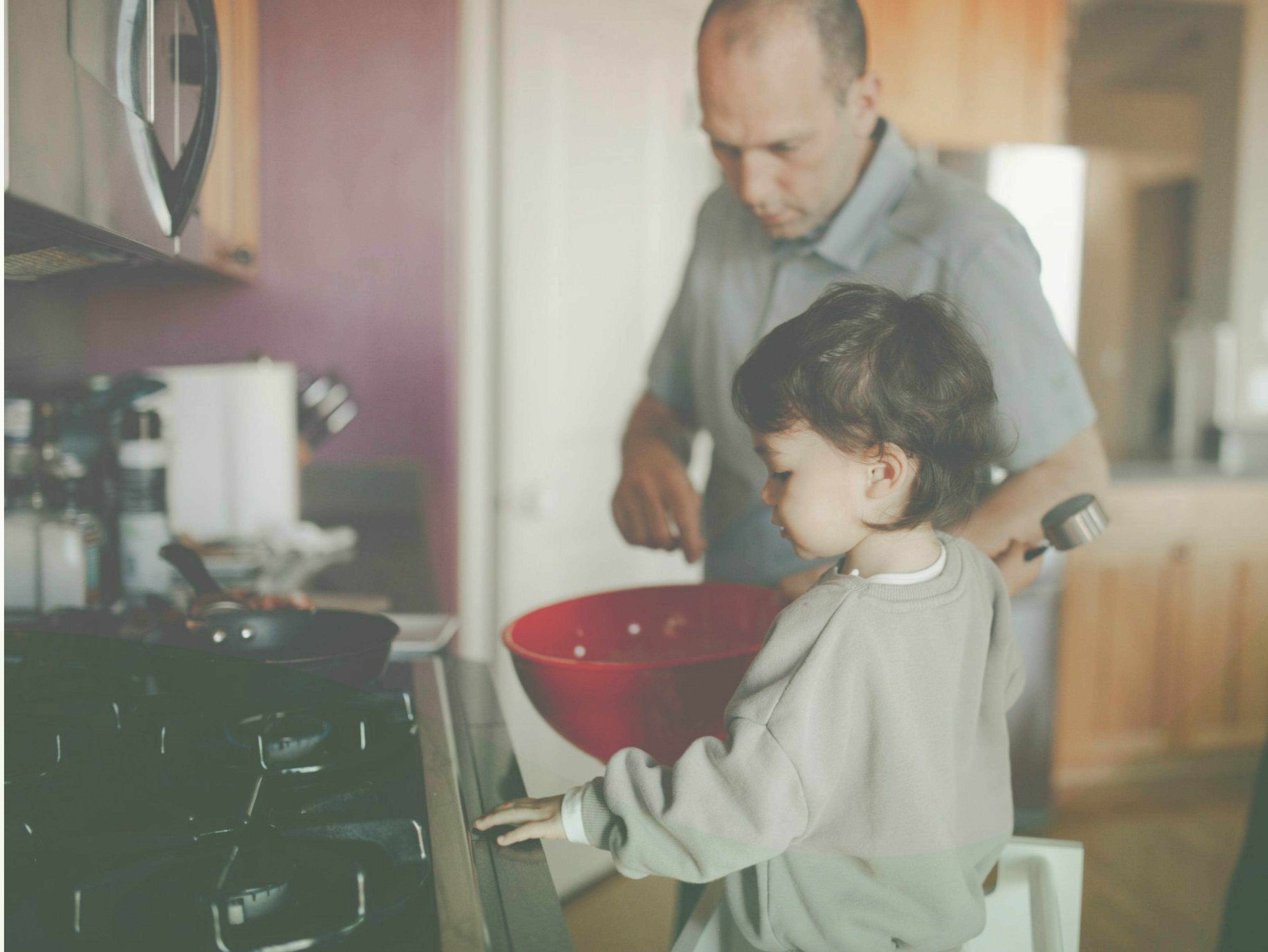
“Give a man a fish, and you feed him for a day. Teach a man to fish, and you feed him for a lifetime.” I invite you to apply this proverb to the life skill of cooking. Give your kids home-cooked food, and you feed them for a day. Teach your kids to cook, and you feed them for a lifetime. This is an important mindset shift when the natural impulse for any of us parents is that it’s just easier to cook yourself than to invite your children into the kitchen to cook with you. It’s faster. Less messy. Less complicated. But the data is clear that it’s worth the investment. Like so many skills taught early in life–from piano to swimming, riding a bike to financial literacy—teaching kids young pays dividends throughout their lifetime. Kids who are more confident cooks by the time they’re late teenagers don’t just eat better when they’re under your roof, they go on to eat healthier as adults.
At Climate Kitchen, we’re big on family meals, cooked mostly from scratch as often as is practical. So if you’re already doing this on a regular basis, serious props to you and your family. There’s a big trend in the parenting zeitgeist right now that key behaviors and skills aren’t taught but caught—seen and observed by children from parents modeling the desired behaviors and skills. I’m a big believer in that, and there’s good data on the power of modeling when it comes to the cultivation of healthy habits. That said, research has shown that kids can’t magically absorb your cooking skills just by watching. You have to actually involve them in it. There is something entirely different about being in the kitchen—almost like stepping onto the stage vs watching from the audience—and about getting their hands in the dough, on the knife, and in the pan.
By teaching your kids to cook, you’re expanding their palates, their life skills toolbox, and their minds, from science and chemistry to the various art forms noted below. But you’re also creating a norm around healthy, climate-smart foods. And this is where the learnings are as much about what you don’t cook as what you do cook. (Though this part might take a few years to sink in.) For instance, my kids love to eat a hot dog at a baseball stadium. But never once have we made one at home. For dinner, vegetables aren’t an afterthought; they’re half the plate. These kinds of patterns ingrain an understanding that healthy, sustainable foods are routine and expected.
Here are my top five practical tips for teaching kids to cook:
Safety First. Underscore that basic food safety and hygiene are non-negotiables before you dive into the fun stuff. No one steps up to the metaphorical plate without first washing their hands.
Design the Experience to Set Them Up for Success. When the clock is ticking and everyone’s hungry for dinner on a Wednesday after you’ve been in meetings all day and are just barely squeezing in a home-cooked meal, that is not the time for imparting complex culinary techniques to your kids. But resist the urge to shoo them out the minute they come running into your zone wanting to taste the sauce or help stir the batter. This can make them feel unwelcome in the kitchen overall. So it’s a great time for the old “yes/and”: “Yes, Honey, you are great at cooking, and I love making magic in the kitchen with you—and right now it’s my turn to be the head chef, so I need you to go play with your brother so I can make sure everyone gets fed tonight.” I like to think of this as: “This Kitchen is Your Kitchen…This Kitchen is My Kitchen.” So when it is their turn, set them up for success: Use recipes you’ve made yourself that you know work. Budget twice as much time as you would if you were making a meal yourself. To reduce the stress, guide them toward recipes that don’t have 30 ingredients or 19 different steps. Give them a snack or let them nibble as you go so they don’t get hangry while cooking. And so on. In short, visualize the whole thing ahead of time to anticipate potential land mines, areas of confusion, delays, or big feelings.
Move them Along a Continuum to Build Confidence. I like this age-appropriate list for some guiding principles, except I think it’s more important to match tasks and responsibilities to a kid’s skills and experience, as well as your comfort level, than their age. My boys have been baking and cooking pasta and scrambled eggs since they were 18 months old, so it’s not exciting to them to boil water or beat eggs. But we have an induction stovetop that I wasn’t worried about them burning their hands on, whereas that might not be safe for every toddler. For a few years, I’d welcome them as my dinner helpers, where I’d pick the dish and they were my sous chefs. This year, now that they’re seven and can read, I felt they were ready for the next level: Once a week, they pick the dish, and I’m their sous chef. Of course, I’m there to supervise, but this shift has dramatically changed how they see themselves. They’re in charge, and dinner is on the line! I have friends with older kids who make the entire dinner for their family on their own, even grocery shopping, and I’m excited to be gradually guiding my boys in that direction.
Unleash their Culinary Creativity. I’m a big fan of visual recipes like My First Recipe Box and Lovevery, as well as fun kid cookbooks like Barbara Lamperti’s Little Helpers Toddler Baking Cookbook and Little Helpers Toddler Cookbook that assign tasks for adults and kids and provide foolproof recipes. At the same time, the real unlock for my boys has been to come up with their own ideas, using whatever ingredients we have. With enough recipe experience under a kid’s belt, inviting a child to use their imagination to invent their own recipes can help them feel like artists in the kitchen, with ingredients their color palate. (A caveat being to have an experienced adult cook at least there on call—perhaps to suggest some baking soda or baking powder if they want something to, well, bake, or to remind them of the concept of servings so we don’t wind up with a single blueberry for the entire batch of 12 blueberry muffins.) My boys have had fun with natural food colorings, color-themed dishes like Everything Green Dinner on St. Patrick’s Day or Everything Orange Dinner on Halloween, and realizing they can zest far more than just lemons.
Show Them How to Improvise–and How to Fail Gracefully. At the same time, tip #2 can help generate positive feedback loops that foster a desire to cook again. It’s also important to teach kids that things don’t always go according to plan, and that’s part of being a cook. Teach what to do when you realize you don’t have an ingredient a recipe calls for. When an ingredient you need turns out to be moldy or otherwise not fit to use. When the recipe says to simmer for 10 minutes but the sauce still isn’t thickened. Or in my case, when recipes are designed for sea level and things just act a little funkier in the oven when you live at altitude. It’s the art of observing, tasting, improvising, and trying to keep your cool while it all unfolds. And then, let’s say the moment comes when you realize the dish is just a flop. Bring in the art of upcycling, repurposing, reframing, or even pivoting to leftovers from the freezer. We were trying to bake muffins and they didn’t rise all that much, so let’s call them cookies instead. We were trying to make a bean skillet dish served on a plate and the sauce was too darn saucy, so now it’s a bean stew served in a bowl. And so on. Progress over perfection.
Recipes for Kids Who Don’t Like Vegetables
Veggie Tempura (SF): Unsurprisingly, for a country that slays at longevity, the Japanese know what’s what when it comes to healthier eating. While I am not usually a big fan of deep-fried foods for kids, I find that veggie tempura is an ideal way to get small humans to enjoy a variety of vegetables and this is a good recipe to have. Both my kids love it at home and when we go out to eat Japanese.
Popcorn Cauliflower, from Little Helpers Toddler Cookbook (SE): There’s something about the teensy size of the cauliflower florets, paired with the fun rainbow colors of the purple, green, and yellow cauliflower that I use, that leads my boys to eat an inordinate amount of this dish. I keep it in heavy rotation since I love it too.
Cucumber Salad (SE): This one is so easy it feels like cheating to call it a recipe. But my sons like it so much they request it. And when that happens–I’m all ears! I skip the dill or parsley (it’s still plenty flavorful).
If you are new here, WELCOME. It’s worth checking out our first edition to find out more about why we started this newsletter and who we are, as well as to learn about our food values — “What is climate-smart kid food?”
We are always open to feedback and suggestions on what to cover, what you like, and what you don’t like — tell us everything:
Have a burning question for Climate Kitchen? In our ”Your Questions—Answered!” section, we answer reader queries — send us yours here.
Thanks for reading Climate Kitchen! Subscribe for free to receive new posts and support my work.